Disclosure: We may earn a commission if you buy through links on this page — at no extra cost to you. Learn more.
Statements on this site have not been evaluated by the Food and Drug Administration. Products and information are not intended to diagnose, treat, cure, or prevent any disease. Learn More
Creatine monohydrate is a cellular energy buffer that replenishes ATP via the phosphocreatine system. Beyond performance benefits, research interest has expanded to cognition under energy stress, neuroprotection, and potential roles in gut barrier integrity and the brain–gut axis.
<aside>
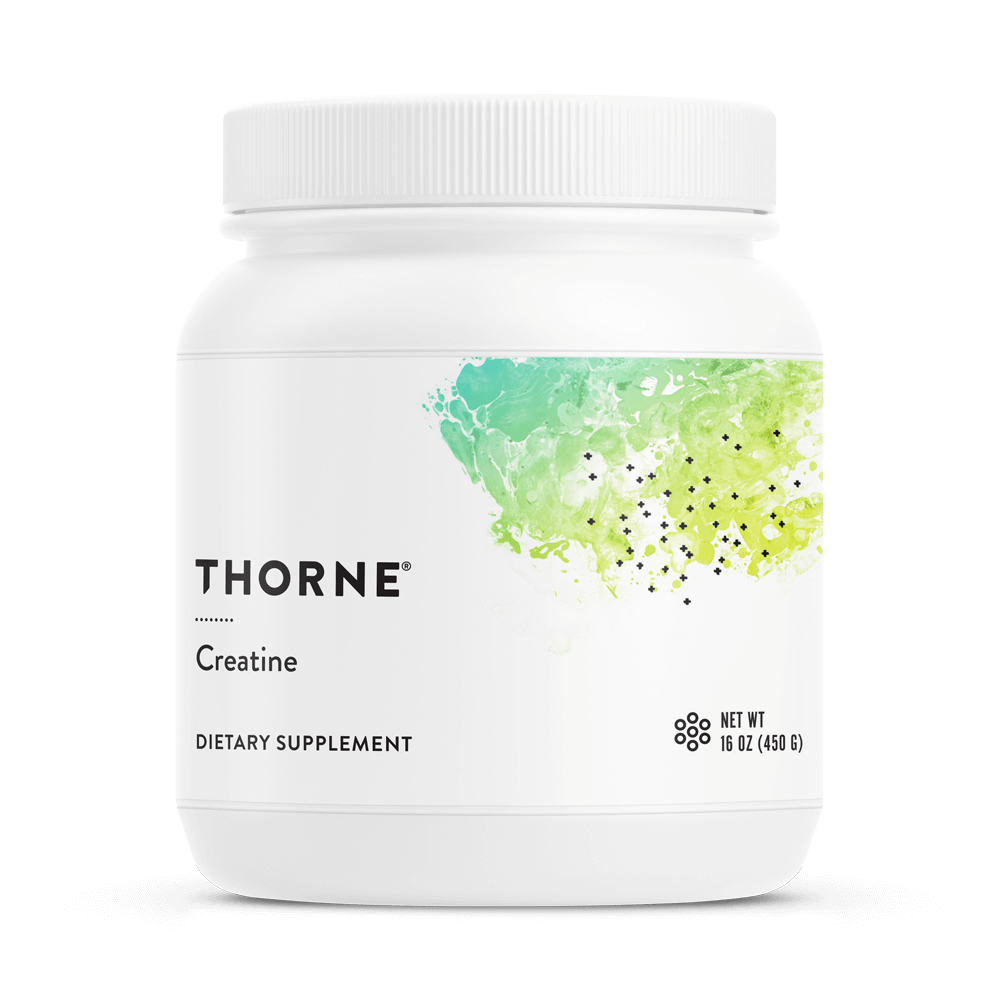
Creatine | Thorne
High-quality creatine to support lean muscle mass, endurance, cellular energy, and brain function.* NSF Certified for Sport®.
</aside>
<aside>
Creatine | Thorne

High-quality creatine for lean muscle mass, endurance, cellular energy, and brain function. NSF Certified for Sport®.
</aside>
<aside>
Creatine | Thorne

High-quality creatine in convenient travel packs to support lean muscle mass, endurance, cellular energy, and brain function.* NSF Certified for Sport®.
</aside>
Meta-analyses and controlled trials indicate small but task- and context-dependent cognitive effects. Benefits are more consistent when brain energy demand is high or creatine status is low, such as sleep deprivation, vegetarian/low-meat diets, or complex working-memory tasks. A 2024 meta-analysis found modest improvements in specific domains (e.g., reaction time, working memory) with heterogeneity across protocols.[3] A 2023 systematic review focused on memory reported improvements vs placebo in healthy individuals, with larger effects in tasks taxing short-term memory and in populations with lower baseline creatine.
Acute high-dose studies during sleep deprivation show faster processing speed and improved cognitive performance, consistent with restored high-energy phosphates on brain spectroscopy. These findings suggest creatine may mitigate mental fatigue under acute energy stress, though optimal acute dosing and generalizability require further study.
Overall: Evidence Quality = Moderate. Effects appear context specific, with stronger signals under energy strain and in lower baseline creatine status.
Mechanistically, creatine supports neuronal bioenergetics, stabilizes cellular energy charge, and may reduce excitotoxicity and oxidative stress. Reviews summarize potential neuroprotective roles across conditions characterized by impaired energy metabolism, with mixed human clinical outcomes to date outside of specific indications.
Preclinical and clinical-theoretical work also explores applications from traumatic and hypoxic injury to neurodegeneration; translational significance remains under evaluation, with dose, duration, and tissue uptake as key variables.
Overall: Evidence Quality = Emerging to Moderate for general neuroprotection; stronger mechanistic plausibility than definitive clinical endpoints in healthy adults at standard doses.
Creatine contributes to epithelial energy homeostasis. In animal models, enhancing epithelial ATP via the creatine pathway helped maintain barrier integrity and reduced colitis severity, suggesting a role in mucosal resilience.